Products Description
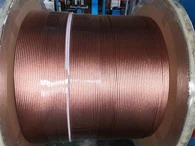
Bare copper wire is a type of copper wire that is produced by drawing pure copper rods into various specifications. Unlike some other wires on the market, bare copper wire isn't coated with any conductive or insulating materials, which is why it is called 'bare' copper wire. The surface of the wire is made entirely of copper metal, providing a smooth, shiny finish that has a distinct brass color.
One of the most notable features of bare copper wire is its exceptional conductivity. Due to the softness of the material, it can be easily formed into a range of different shapes, including single wire conductors or stranded conductors made up of multiple copper wires.
Overall, bare copper wire is an excellent choice for a variety of applications, thanks in large part to its durability, flexibility, and excellent conductivity. Whether you're looking for a simple wire for electrical work or a more complex conductor for use in custom circuits, bare copper wire is a great option that should provide you with exceptional performance for years to come.
Within the realm of electrical wiring, copper conductors come in two distinct forms. These can either be comprised of a solitary wire constructed from copper or they can consist of multiple copper wires. Additionally, when considering bare copper wires, there are two specific types to consider: hard copper stranded wires and soft copper stranded wires.
High tensile strength hard copper wire is manufactured by cold processing with extended wires. This type of wire is especially suitable for use as conductors in overhead transmission lines, distribution lines, and building lines. Its durability and resilience make it an ideal choice for various applications requiring reliable and efficient electrical conductivity. Whether it's for commercial or residential purposes, hard copper wire is a trusted option for ensuring the safe and seamless transmission of electricity.
Hard copper wire is manufactured by subjecting the wire to a heating process to eliminate any residual stress resulting from the cooling process. This heat treatment imparts flexibility to the wire while maintaining its high conductivity. The wire finds extensive use in the production of conductors for power cables, communication systems, electrical machinery, as well as various household appliances.
Product characteristics
When it comes to copper wire, the choice between hard and soft wire will largely depend on your specific needs. Hard copper wire is typically favored in applications where exposed wiring is needed, particularly in equipment power distribution and machine tool distribution panels. This is because hard wire provides the best results when it comes to ensuring horizontal and vertical wiring.
On the other hand, if you require a more flexible and malleable copper wire, you may want to opt for soft copper wire instead. Soft wire has its own set of advantages, including improved flexibility and ease of handling during installation.
Ultimately, the decision between hard and soft copper wire will depend on the unique requirements of your application. Whether you choose hard or soft wire, it's important to work with a reputable supplier to ensure that you're getting the highest quality product for your needs.
Areas with limited space for laying or connecting wires are particularly suitable for the use of flexible wires. Additionally, locations with numerous twists and turns in the wiring also benefit from the utilization of these wires.
The copper flexible stranded wire is composed of hard round copper wire that is reinforced with soft round copper wire. To ensure that the final product is both visually appealing and soft to the touch, the wire must undergo a rigorous toughening process during manufacturing. The finished product is neat and tidy, making it an excellent choice for electrical applications.
Characteristics of Stranded Wire
Good softness is a key attribute that brings several advantages during installation. By reducing damage caused by bending, vibration, and oscillation, it ensures a smoother and more secure installation process. This softness factor adds significant value to the overall effectiveness of the installation, further enhancing its benefits.
It is worth noting that stranded wires boast a good level of reliability due to the fact that any defects present in the single wires which make up the stranded wire are not concentrated in one particular area. As a result, the impact of these defects on the overall performance of the stranded wire is significantly reduced compared to that of a single conductor. This makes stranded wires a highly sought-after wiring solution for a wide range of different applications.
The high strength of wires can be attributed to several factors. Firstly, when using the same material for the rod, thin wires tend to have a greater deformation degree compared to thicker wires. This indicates that the thin wires can withstand higher levels of stress and strain, thus exhibiting higher strength. Additionally, stranded wires, which consist of multiple conductors arranged in a bundle, exhibit even higher strength than single conductors of the same cross-section. This is due to the combined strength and reinforcement provided by the individual conductors, resulting in a stronger overall wire. Overall, the strength of wires can be enhanced by considering factors such as the rod material, deformation degree, and arrangement of conductors.
application area
In various industries, the versatile bare copper stranded wire finds its applications in the production of power cables, communication cables, control cables, and special cables. These cables serve a wide range of sectors including power, railway, communication, aviation, medical, transportation, construction, and shipbuilding.


physical property
In terms of physical properties, the bare copper stranded wire material is soft, with excellent conductivity and strong heat exchange ability.
QA&QC Quality Assurance and Quality Control
The quality and control standards meet national standards (GB/T3953), American standards (ASTM B172, B174), European standards (IEC60228), Japanese standards (JCS-1226, JASO D611), etc
Packaging, storage, handling, and transportation
After the production of bare copper wire is completed, it must be packaged, stored, handled, and transported strictly in accordance with customer and industry standards to ensure that the product is not affected by moisture or damage.
Partners

Hot Tags: 10 gauge copper ground wire, China 10 gauge copper ground wire manufacturers, suppliers, factory