Product description
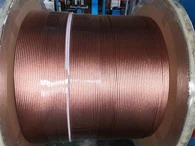
A common type of copper strand is the 6mm variant, which is typically twisted. It can either be twisted by itself or after being twisted with other strands, resulting in a wire composed of intertwined twists.
The stranding process involves several key parameters, including stranding pitch, stranding coefficient, stranding direction, and stranding rule. It is critical to understand each parameter's role in achieving a successful stranded product. The stranding pitch determines the distance between adjacent strands, while the stranding coefficient refers to the ratio of the total wire cross-sectional area to the overall cross-sectional area of the final rope. The stranding direction indicates the orientation of each strand compared to the rope's central axis, and the stranding rule dictates the specific pattern followed during the stranding process. Overall, careful consideration of each of these parameters is vital to producing a high-quality, durable stranded product.
The distance advanced, known as the hinge pitch, is achieved when a solitary wire completes one rotation along the strand axis. To generate highly similar content based on the original text, the following rearrangement can be done: The hinge pitch refers to the distance covered as a single wire rotates once along the strand axis.

The smooth copper strand is primarily made from copper and exhibits a purplish surface color. It undergoes drawing and annealing before being twisted.
The 6mm copper stranded wire is a popular option in various cable products. With its flexibility, it can function as a single insulation or as a multi-core insulation. Its conductivity and durability make it a reliable choice for many applications.
There are various reasons why wires are stranded in different ways. There are two types of laying direction, where the twisted wire is placed vertically in the front. When it comes to copper wire texture, the left upper end points towards the left, while the upper right points towards the right. It's essential to note these differences to ensure proper wire placement and functionality. Let's make sure that we follow the correct stranding technique for each application to avoid potential issues.

Application field
There are numerous forms of cables that can be produced from 6mm copper stranded wire, which is extensively employed in various fields including ground wire and core wire.
A ground wire, also known as an earth wire, plays a crucial role in electrical systems and electronic devices. Its primary purpose is to establish a connection with the ground, housing, or a reference potential of zero. By doing so, it helps prevent electric shock incidents arising from potential damage to the internal insulation of the device's shell. This vital safety measure ensures user protection and mitigates the risk of electrical accidents.
In order to ensure the safety of individuals when using electronic devices like home appliances and office equipment, protective grounding is implemented through the use of a safety grounding cable. This grounding system serves to prevent electrical shock accidents. It encompasses various aspects of safety grounding, including protection against lightning strikes and mitigating electromagnetic radiation. By incorporating these measures, the risk associated with using electronic equipment can be significantly reduced.

Partner

Hot Tags: 6mm bare copper earth wire, China 6mm bare copper earth wire manufacturers, suppliers, factory