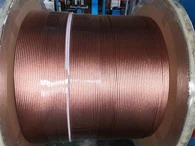
Products Description
The plating process occurs as a direct current is applied, and a uniform and dense layer of nickel is deposited onto the cathode. Depending on the type of plating solution used, the resulting nickel coating can be either bright or dark in appearance. Bright nickel plating is achieved using a plating solution that includes a brightener.
Another form of nickel plating is called electroless plating or autocatalytic plating. This process involves the reduction of metal ions in aqueous solution, which then precipitate onto a solid substrate. The result is a continuous thickening of the coating.
One important difference between electroless plating and other forms of plating is that the plating group itself has catalytic properties. This process offers a range of benefits over other plating methods, including the ability to plate non-conductive surfaces and achieve uniform coating thickness without the need for expensive equipment.

Product characteristics
Nickel plating is a process that involves coating an object with a thin layer of nickel. This plating technique imparts a range of characteristics, properties, and uses to the plated material.
One of the main characteristics of nickel plating is its corrosion resistance. The nickel layer acts as a protective barrier against environmental factors, preventing the underlying material from rusting or deteriorating. This makes nickel plating ideal for applications where the object may be exposed to moisture or harsh conditions.
In addition to corrosion resistance, nickel plating offers excellent wear resistance. The plated surface becomes harder and less prone to damage from friction or abrasion. This property is advantageous for objects that undergo frequent use or contact with other materials, such as industrial equipment or tools.
Furthermore, nickel plating provides good electrical conductivity. The nickel layer allows for efficient transfer of electrical current, making it suitable for use in electronic components, connectors, and electrical contacts.
Lastly, nickel plating presents an aesthetic advantage by giving the object a lustrous and shiny appearance. This decorative aspect makes nickel-plated items popular in the manufacturing of jewelry, decorative pieces, and household items.
The uses of nickel plating are diverse and widespread. It finds significant application in the automotive industry, where it is utilized for coating components such as engine parts, exhaust systems, and decorative trim. Nickel plating is also extensively employed in the aerospace sector for its corrosion resistance and ability to withstand high temperatures.
Beyond transportation sectors, nickel plating is used in the production of household appliances, faucets, and plumbing fixtures for its durability and aesthetic appeal. Moreover, it finds utility in the manufacturing of electronic devices, where its electrical conductivity is leveraged for circuitry and contacts.
To summarize, nickel plating offers a range of valuable characteristics and properties such as corrosion resistance, wear resistance, electrical conductivity, and aesthetic appeal. These attributes make it a versatile choice for various applications, including automotive, aerospace, household, and electronics industries.
The high stability of the electroplated nickel layer in the air is mainly attributed to the excellent passivation ability of the metal nickel. By forming an incredibly thin passivation film on its surface, nickel is able to effectively resist corrosion from the atmosphere, alkali, and certain acids. Therefore, the electroplated nickel layer remains highly resistant to environmental degradation.
Electroplating nickel crystal displays remarkable properties, primarily due to its minuscule size and superb polishing capabilities. This specific technique allows the nickel coating to achieve a gleaming mirror-like shine, which can endure in the atmosphere for an extended period. Consequently, electroplating is frequently utilized for ornamental purposes.
Nickel coating is a versatile material that offers various benefits for different applications. One of the primary advantages of nickel plating is its high hardness, which improves the wear resistance of product surfaces. This property makes nickel plating a popular choice in the printing industry to enhance the lead surface's durability. Another benefit of nickel plating is its high chemical stability, making it ideal for use in chemical equipment. Moreover, for functional purposes, nickel plating is commonly used to repair corroded or worn parts using brush plating technology.
Electroforming process is another application of nickel plating, producing electroforming plates, record molds, and other molds for the printing industry. Additionally, thick nickel plating layers offer excellent wear resistance, serving as suitable wear-resistant coatings. Recently, composite plating has developed, creating composite nickel coatings with wear-resistant particles, resulting in higher hardness and wear resistance than nickel plating. Another type of composite coating uses graphite or fluorinated inks as dispersed particles, creating nickel-graphite or nickel-fluorinated inks composite coatings with good self-lubricating properties, serving as excellent lubricating coatings.
Lastly, black nickel coating is also widely used as the coating of optical instruments or decorative coatings. In conclusion, nickel coating is highly beneficial and versatile for various industries, offering exceptional wear resistance, chemical stability, and excellent functional and decorative properties.
4, the application of nickel plating is very wide, can be used as a protective decorative coating, on the surface of steel, zinc die casting, aluminum alloy and copper alloy, to protect the base material from corrosion or play a bright decorative role; It is also often used as an intermediate coating of other coatings, on which a thin layer of chromium is plated, or a layer of imitation gold is plated with better corrosion resistance and more beautiful appearance. In terms of functional applications, nickel plating on parts in special industries is about 1~3mm thick, which can achieve the purpose of repair. Especially in the continuous casting mold, electronic component surface mold, alloy die-casting mold, complex shape aerospace engine components and micro electronic components manufacturing more and more widely.
5, in electroplating, because electroplating nickel has many excellent properties, its processing volume is second only to electrogalvanizing, and its consumption accounts for about 10% of the total nickel production.
Application field
Can be processed, derived from a variety of cables, such as power cables, communication cables, control cables, special cables, these cables are widely used in power, railway, communications, aviation, medical, transportation, construction, ships and other industries.


Physical property
Electroless nickel plating features, properties, uses:
1, thickness uniformity Uniform thickness and good plating ability is a major feature of electroless nickel plating, but also one of the reasons for wide application, electroless nickel plating to avoid the plating due to uneven current distribution caused by uneven thickness. During electroless plating, as long as the surface of the part is in contact with the plating solution, the components consumed in the plating solution can be supplemented in time, and the coating thickness of the plating part is basically the same, even if the groove, gap, and blind hole are also the same.
2, the plating will not be hydrogen infiltration, no hydrogen embrittlement, no need to remove hydrogen after electroless nickel plating.
3, the functions of many materials and parts, such as corrosion resistance and high temperature oxidation resistance, are better than nickel plating.
4, can be deposited on the surface of various materials, such as: steel nickel base alloy, zinc base alloy, aluminum alloy, glass, ceramics, plastics, semiconductors and other materials on the surface, so as to improve the performance of these materials to create conditions.
5, do not need the general electroplating required DC motor or control equipment.
6, the heat treatment temperature is low, as long as it is below 400℃ after different holding time, different corrosion resistance and wear resistance can be obtained, therefore, it is especially suitable for the functional coating of parts with complex shapes and surface requirements for wear and corrosion resistance
QA&QC Quality assurance and quality control
Quality and control standards meet BS EN13601 ASTM B355, GB/T 11019-2021 nickel-plated round copper wire.
Packing, storage, handling and transportation
During the transportation of the product, take protective measures such as moisture proof (wrap the product with four square plastic bags on rainy days), anti-bruise (fix the product with a wooden frame to prevent the product from rolling and bruise), and each delivery is delivered at the scheduled time.
After the completion of the production of tin copper alloy must be strictly in accordance with the customer and industry standards for packaging, storage, handling and transportation, to ensure that the product is not damp, not hurt.
Conductor storage environment, storage period:
Storage conditions of finished products at ambient temperature ≤35℃, relative humidity ≤65%. (The storage life of the conductor must meet the requirements of temperature and humidity)
partners

Hot Tags: nickle plated single wire, China nickle plated single wire manufacturers, suppliers, factory