Products Description
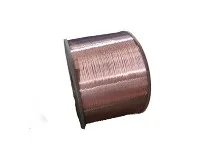
Bare copper wire is essentially a pure copper wire that is drawn from a solid copper rod with no insulation or coating present on the exterior surface. It is commonly referred to as "bare copper wire" due to its copper-colored appearance and the fact that both the inside and outside of the wire consist of copper metal.
The physical characteristics of bare copper wire include its exceptional conductivity and softness.
According to specific requirements, bare copper wires have the flexibility to be transformed into different shapes like flat wires, round wires, and various other types of wires. Additionally, by combining multiple bare copper wires, they can be fashioned into various stranded wires and multi-stranded wires. This versatility allows the bare copper wires to be tailored to meet diverse application needs.
The conductor made of copper can be either a single wire or a combination of multiple wires. In either case, it is referred to as a copper conductor.
Copper wire comes in two major variations: hard and soft. Hard copper wire is produced through a process of stretching and cold processing, resulting in a durable wire with excellent tensile strength. This type of wire is primarily utilized in overhead transmission lines, distribution lines, and construction projects where strength is crucial.
On the other hand, soft copper wire starts as hard copper wire but undergoes a heating process to eliminate any residual stress caused by the cold processing. This heat treatment renders the wire highly flexible and bendable while still maintaining its remarkable conductivity. Soft copper wire finds its application in the manufacturing of communication and power cables, as well as electrical machinery and various household appliances.
By rearranging the information provided, it can be summarized that hard copper wire is suitable for overhead transmission lines, distribution lines, and construction wires due to its high tensile strength. Conversely, soft copper wire, obtained by heating hard copper wire, is flexible, highly conductive, and commonly used for communication and power cables, electrical machinery, and household appliances.
Copper wires come in different types, including semi-hard, tinned, and flat-angle varieties, each serving specific purposes. Semi-hard copper wire falls between hard and soft wires in terms of tensile strength. It is commonly used for binding overhead wires and for radio wiring purposes. On the other hand, tinned copper wire has a tin-coated surface, which enhances its solderability and provides protection to the copper. This type of wire doesn't corrode when PVC or rubber insulation is applied, preventing the aging of the insulation material. Lastly, flat-angle copper wire features a square or rectangular cross-section and is primarily utilized in the production of induction coils for large transformers or motors.
Oxygen-free copper wire is a type of high-purity copper wire, which has a minuscule oxygen content of less than 0.001%. The copper content is exceptionally high, exceeding 99.99%, and is not prone to becoming brittle due to oxygen exposure. This type of copper wire is commonly used in the manufacturing of vacuum tubes, semiconductor parts, and ultra-fine wires due to its superior quality. Whether you are looking for wires for high-tech electronic devices or for other applications, oxygen-free copper wire is an excellent choice. Its exceptional purity makes it the preferred option for industries that rely on high-performance copper wires.
Product Features
The physical and mechanical properties of bare copper wire are exceptional, and it also displays remarkable electrical conductivity.
2. Key characteristics: Its exceptional electrical and thermal conductivity, remarkable resistance to corrosion, and impressive processability make it an ideal material. It exhibits compatibility with welding and brazing techniques. However, caution should be exercised when subjecting it to processes like annealing or working in high-temperature reducing environments.
Copper alloys are indispensable materials in the power and electrical industries, and their excellent conductivity and strength make them ideal for various applications. Power cables, busbars, transformers, switches, plug-in components, and connectors all rely on copper alloys. In the manufacturing of electric motors, copper alloys are also widely used due to their high conductivity and strength. These materials play a crucial role in ensuring the efficiency and reliability of electrical systems.
Application field
Copper wire in its bare form is a versatile material that can be transformed into an array of cable types used across various industries. These cables find extensive use in ultra-high voltage applications, communication networks, marine operations, automotive wiring, electronics, and several other sectors. In addition, copper wire is also applicable to photovoltaic and electromechanical fields, proving its significance in diverse areas.


Physical properties
In terms of physical properties, the bare copper wire is soft, has excellent electrical conductivity and strong heat transfer capability.
1. The conductivity of copper One of the most important characteristics of copper is its excellent conductivity, and its conductivity is 58m/(Ω.mm squared). This characteristic has led to copper being widely used in the electronics, electrical, telecommunications and electronics industries. This high conductivity of copper is related to the atomic structure: when multiple individual copper atoms are combined into a copper block, their valence electrons will no longer be confined to the copper atoms, so they can move freely in all solid copper , its conductivity is second only to silver. The international standard for the conductivity of copper is: the conductivity of a piece of copper with a length of 1m and a weight of 1g is generally considered to be 100% at 20°C. The current copper smelting technology can already produce the same grade of copper with a conductivity 4% higher than this international standard. ~5%.
2. Thermal conductivity of copper Another important effect of free electrons in solid copper is that it has extremely high thermal conductivity, with a thermal conductivity of 386W/(m.k), second only to silver. In addition, copper reserves are more abundant than gold and silver, and the price is cheaper, so it is made into various products such as wires and cables, connector terminals, busbars, lead frames, etc. Copper also has key information on various heat exchange equipment such as heat exchangers, condensers, and radiators. , metallurgy and other heat exchange occasions.
3. Corrosion resistance of copper Copper has excellent corrosion resistance, which is better than ordinary steel and better than aluminum in alkaline atmosphere. The potential series of copper is +0.34V, which is higher than that of hydrogen, and it is a metal with a relatively positive potential. The corrosion rate of copper in fresh water is also very low (about 0.05mm/a). And the use of copper pipes is far beyond that of iron water pipes. Just because of this feature, minerals do not accumulate on the pipe wall when tap water is transported, so a large number of copper water pipes, faucets and related equipment are used in high-end bathroom water supply installations. Copper is extremely resistant to atmospheric corrosion. It can form a protective film mainly composed of basic copper sulfate on the surface, that is, patina, and its chemical composition is CuS04*Cu(OH)2 and CuSO4*3Cu(OH)2. Therefore, copper is used in building roof panels, rainwater pipes, upper and lower pipes, pipe fittings; chemical and pharmaceutical containers, reactors, pulp filters; ship equipment, propellers, living and fire pipe networks; punching coins (corrosion resistance ), decorations, medals, trophies, sculptures and handicrafts (corrosion-resistant and elegant colors), etc.
QA&QCQuality Assurance and Quality Control
Bare copper wires must be produced and inspected according to the standards of GB/T 3953 "Electrical Round Copper Wire" and GB/T 4909 "Test Methods for Bare Wires".
Packaging, storage, handling and shipping
After the bare copper wire is produced, it must be packaged, stored, handled and transported in strict accordance with customer and industry standards to ensure that the product is free from moisture and damage.
Partner
Leoni, Hitachi, Sumitomo, Belden, Nexans, Hengtong Group, etc.


Q: What sizes of bare copper wire are available?
A: Bare copper wire is available in various sizes, typically specified by the wire gauge. Common sizes for grounding applications range from 4 AWG (American Wire Gauge) to 2/0 AWG, but other sizes may be available depending on the specific requirements and applications.
Q: Can bare copper wire be used for other purposes besides grounding?
A: While bare copper wire is primarily used for grounding, it can also be used in other electrical applications where insulation is not necessary. For instance, it can be utilized in art projects, crafts, jewelry making, or as an antenna wire.
| Wire gauge | (mm) Construction | (mm²) Cross Section | Packing |
|
40 |
7/0.003 |
0.0049 |
200〞 |
|
37 |
7/0.004 |
0.0088 |
200〞/300〞 |
|
36
|
7/0.05 |
0.01 |
355〞/300〞 |
|
7/0.07 |
0.026 |
355〞/300〞 |
|
|
32 |
7/0.08 |
0.03 |
400〞 |
|
30
|
7/0.10 |
0.05 |
400〞 |
|
16/0.064 |
0.05 |
400〞 |
|
|
28
|
10/0.10 |
0.08 |
400〞 |
|
7/0.127 |
0.09 |
400〞 |
|
|
19/0.08 |
0.1 |
400〞 |
|
|
26
|
7/0.14 |
0.11 |
400〞 |
|
10/0.12 |
0.113 |
400〞 |
|
|
7/0.15 |
0.123 |
400〞 |
|
|
50/0.18 |
1.27 |
500〞/630〞 |
|
|
7/0.16 |
0.14 |
400〞/500〞 |
|
|
19/0.10 |
0.15 |
400〞 |
|
|
30/0.08 |
0.15 |
400〞 |
|
|
41/0.064 |
0.132 |
400〞 |
|
|
50/0.20 |
1.57 |
500〞/630〞 |
|
|
25 |
7/0.18 |
0.18 |
400〞 |
|
24
|
7/0.20 |
0.22 |
400〞/500〞 |
|
19/0.127 |
0.24 |
400〞/500〞 |
|
|
11/0.16 |
0.22 |
500〞 |
|
|
65/0.064 |
0.21 |
500〞/630〞 |
|
|
105/0.051 |
0.214 |
500〞/630〞 |
|
|
50/0.26 |
2.65 |
500〞/630〞 |
|
|
23
|
60/0.08 |
0.3 |
500〞/630〞 |
|
7/0.23 |
0.29 |
400〞/500〞 |
|
|
7/0.254 |
0.35 |
400〞/500〞 |
|
|
22
|
7/0.26 |
0.37 |
500〞/630〞 |
|
17/0.16 |
0.34 |
500〞 |
|
|
105/0.064 |
0.338 |
500〞/630〞 |
|
|
28/0.15 |
0.49 |
400〞/500〞 |
|
|
10/0.254 |
0.51 |
400〞/500〞 |
|
|
19/0.19 |
0.54 |
400〞/500〞 |
|
|
20
|
7/0.32 |
0.56 |
400〞/500〞 |
|
19/0.203 |
0.61 |
400〞/500〞 |
|
|
26/0.16 |
0.52 |
400〞 |
|
|
19/0.23 |
0.79 |
500〞/630〞 |
|
|
16/0.254 |
0.81 |
500〞/630〞 |
|
|
19/0.24 |
0.86 |
500〞/630〞 |
Hot Tags: plain copper wire, China plain copper wire manufacturers, suppliers, factory