Products Description
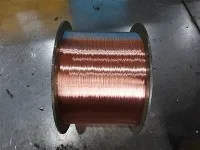
Bare copper wires are essentially copper wires that are drawn from pure copper rods without any additional coatings or varnishes on their surface. These wires are commonly referred to as bare copper wires and are characterized by their bright and clean copper color. In terms of physical properties, bare copper wires are soft and possess exceptional electrical conductivity.
Copper wire is known for its excellent conductivity, as it conducts electricity efficiently. Additionally, it possesses desirable qualities such as resistance to oxidation, suitable hardness, and tensile strength. The earth's copper reserves are abundant, making it a readily available resource. Comparatively, gold and silver have even better conductivity than copper, but their limited reserves and high prices restrict their usage to extreme conditions. Despite this, copper remains a favorable choice due to its widespread availability, reasonable price, and numerous advantages.
If you're looking to customize your copper wire for specific applications, there are various shapes you can form them into, such as flat wires, round wires, and a variety of other types of wires. You can also join multiple bare copper wires together to create stranded wires and multi-stranded wires. The possibilities are endless when it comes to working with bare copper wire. By manipulating it in different ways, you can create a product that meets your unique needs. So whether you need a custom wiring solution for your home or business, bare copper wire can be a great choice.
Product Features
Copper wire in its bare state possesses impressive physical and mechanical attributes, along with excellent electrical conductivity.
Application field
The three major application fields of wire and cable can be summarized as follows.
The wire and cable products used in power systems serve various purposes, including overhead transmission lines, bus bars (busbars), power cables, and wires and cables for electrical equipment used in such systems. Bare wires are commonly used for transmission lines, while bus bars provide electrical connectivity in switchgear and control gear assemblies. Power cables are used for underground and underwater transmission, while wires and cables for electrical equipment ensure reliability and safety in power systems.
The information transmission system relies on a variety of wires and cables to operate efficiently. These include telephone cables, cable television cables, data transmission cables, radio frequency cables for mobile wireless communication systems, and different types of electronic cables. However, in recent years, the use of optical fiber and cable has skyrocketed and become the primary transmission medium for information transmission lines. It has taken over from other forms of cables and wires and now accounts for a significant portion of the transmission network. This advancement has improved the speed and reliability of information transmission systems, making it possible to transmit vast amounts of data quickly and seamlessly.
Electric power and information systems rely heavily on wires and cables to connect electrical equipment and instruments. These wires and cables are essential for transmitting electricity and signals from the system's starting point (such as generators and signal transmitters) to every node in the system (such as transformers and program-controlled switches), and finally to user terminals (including household appliances, telephones, televisions, and computers). The extensive use of wires and cables is crucial in ensuring seamless communication and power transmission throughout the entire system.


Physical properties
In terms of physical properties, the bare copper wire is soft.
The atomic number of copper is 29, belonging to the transition metal, the density is 8.92g/cm3, the melting point is 1083.4 ℃, it has good thermal conductivity and electrical conductivity, but in the moist air, the surface of copper metal reacts with oxygen to form Cu2(OH) 2C03, namely patina,
QA&QCQuality Assurance and Quality Control
Bare copper wires must be produced and inspected according to the standards of GB/T 3953 "Electrical Round Copper Wire" and GB/T 4909 "Test Methods for Bare Wires".
Packaging, storage, handling and shipping
After the bare copper wire is produced, it must be packaged, stored, handled and transported in strict accordance with customer and industry standards to ensure that the product is free from moisture and damage.
Partner
Leoni, Hitachi, Sumitomo, Belden Nexans, Hengtong Group, etc.


Q: Are there any safety considerations when working with bare copper wire?
A: Yes, safety is essential when working with any electrical wiring, including bare copper wire. Always ensure proper grounding practices, follow electrical codes and regulations, and take necessary precautions to prevent electrical shock or injury. If you are unsure about the installation or usage of bare copper wire, it is recommended to consult a qualified electrician for guidance.
Q: What is bare copper wire?
A: Bare copper wire is a type of electrical conductor made solely of copper without any additional insulation or coating. It is typically used for grounding applications, where a direct connection to the earth is required.
Hot Tags: wire bare, China wire bare manufacturers, suppliers, factory